By Christian N.
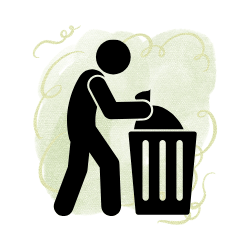
Fifteen years ago, the internet was a conversation.
You’d read something on a blog, scroll down, and there was often a space for you to respond, challenge, ask questions, share your own story. Strangers would talk to each other and spin off entirely new ideas. Often times, the comment section was deeper and more insightful than the original article itself.
Today, that space is mostly gone.
Sure, you can still “comment” … but it’s on a Twitter post (yes, Twitter), a Reddit thread or maybe on LinkedIn. It’s scattered, detached from the original piece, and owned by someone else.
The sad part is …
No one forced us to do this. Social networks didn’t break into our blogs and rip out the comment boxes. We did it to ourselves. One by one, site owners closed the gates. We traded the messiness of our own spaces for the convenience of theirs. And they were happy to take the conversation off our hands.
In the process, we lost something bigger than we realised.
How we gave our conversations away
Back then, having comments on your blog was a no-brainer. You didn’t think about it. You installed your blogging software, the comment form was there by default, and people used it.
Then things started to shift.
At first it was the spam.
Entire rivers of junk comments, bots trying to sell you fake sunglasses or magic pills. Moderation became a chore.
Then came the trolls.
People who had nothing to add except an insult, or worse. Every popular blogger had a story about one or two voices that poisoned the well.
At the same time, social media was rising fast. Facebook, Twitter, Reddit, LinkedIn… places where people already had accounts, friends, and built-in audiences. It was easier. You could share your blog post there, get comments and likes instantly, without having to clean up a mess in your own backyard.
And then… slowly… one by one, news sites and bloggers closed their comment sections. It started with the big names, then small ones copied. I remember the first one I used to follow was CopyBlogger, they closed their comment sections, and I never came back.
While researching this, and after 10 years, I found the original Copyblogger post announcing their decision to remove comments:
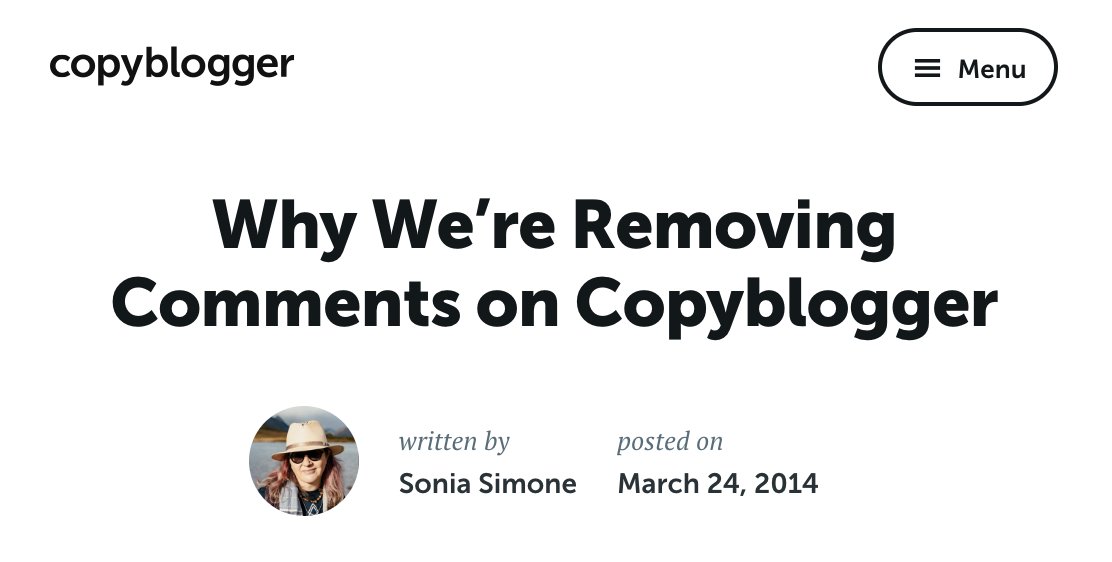
A short, dry announcement… with no comments, of course.
Then I came across another post critiquing their decision:

This one was full of discussion in the comments section, including comments from Sonia Simone herself, the very author of Copyblogger’s “no comments” post.
The irony? The conversation she had, moved off their own site and onto someone else’s. Exactly what happens when you close your own door.
Some said it was to “move the conversation to social.” Others said they were protecting their sanity. Both reasons made sense at the time.
But here’s what we didn’t see coming:
When you close your own door and tell people to meet you in someone else’s house, you stop being the host. You’re just another guest, and the house rules are no longer yours.
Social media replaced comment sections, then conditioned us to accept a narrower, more centralized conversation space, where the terms of engagement are outside our control.
The irony is, the original “Web 2.0” vision was about user-generated content everywhere, not user-generated content funnelled into a handful of corporate-owned feeds.
We lost bit of the internet’s soul
It wasn’t simply losing a place to type words under a post, we lost the “campfire”.
A spot where the article and the conversation lived together. Where a reader could scroll down and see the whole story all in one place: arguments, agreements, clarifications and everything in between. The content and the discussion feeding each other, preserved for the next person who came along.
Now, that conversation is scattered. A reply on Twitter over here, a Facebook comment buried under an ad over there, a screenshot of someone’s LinkedIn rant somewhere else. If you want to follow the whole thing, good luck.
We also lost ownership.
When the comments lived on your site, they were part of your history. Your community. Your little corner of the internet. Now they belong to the platforms. They decide who sees them, for how long, and whether they stay up at all.
And maybe the biggest loss? The sense that this was our space.
Now, it’s a feed. Now, it’s a scroll. Now, it’s rented land in someone else’s Empire.
It might sound small. Who cares if a comment is on your blog or on Twitter (yes, Twitter)? As long as people are talking. But it’s not the same.
When the conversation happens on your site, it’s part of the public record. It’s attached to the original context. Someone reading the article a year later can still see how people reacted, what questions they asked, what points were debated. It’s all there, intact.
On social, the record is broken.
Replies vanish into the feed within days. Old discussions are buried, if they’re even still there. Sometimes the platform deletes them outright, or the person’s account disappears, taking the whole thread with it.
We also lost control.
On your own site, you set the rules. You can moderate, guide, and protect the tone of the space. On social media, the rules are written for everyone, everywhere, by a company whose goals aren’t the same as yours. They can hide, throttle, or outright remove things… and there’s nothing you can do about it.
Here’s something more subtle.
When the conversation leaves your space, your audience leaves with it. They follow the thread somewhere else, and they stay there. That’s how we went from a web of many small, independent communities to a few giant ones owned by corporations.
We did not only lose our comment sections. We lost a piece of the internet’s soul.
It was a shift of power that we willingly gave away to big corporations.
It’s time we bring it back
We gave it away willingly, we can bring it back purposely.
All it requires is an understanding of what we value.
And our choice.
We can put the conversation where it belongs, right next to the content, in spaces we own, with rules we set.
This is what we didn’t value. And threw away.
The price we’re paying for this is much heavier than you might realize.
If you only knew how elections are steered through what people are shown and the conversations they are encouraged to be part of, with a simple feed.
And it’s not just algorithms.
In times of unrest, entire governments shut down social media to limit unwanted conversations.
Examples…
In 2022, Sri Lanka blocked Facebook, Twitter, WhatsApp, and YouTube during mass protests. Iran restricted Instagram and WhatsApp during the Mahsa Amini protests. Myanmar’s military blocked Facebook after its coup. Turkey has throttled Twitter to control the narrative after political shocks.
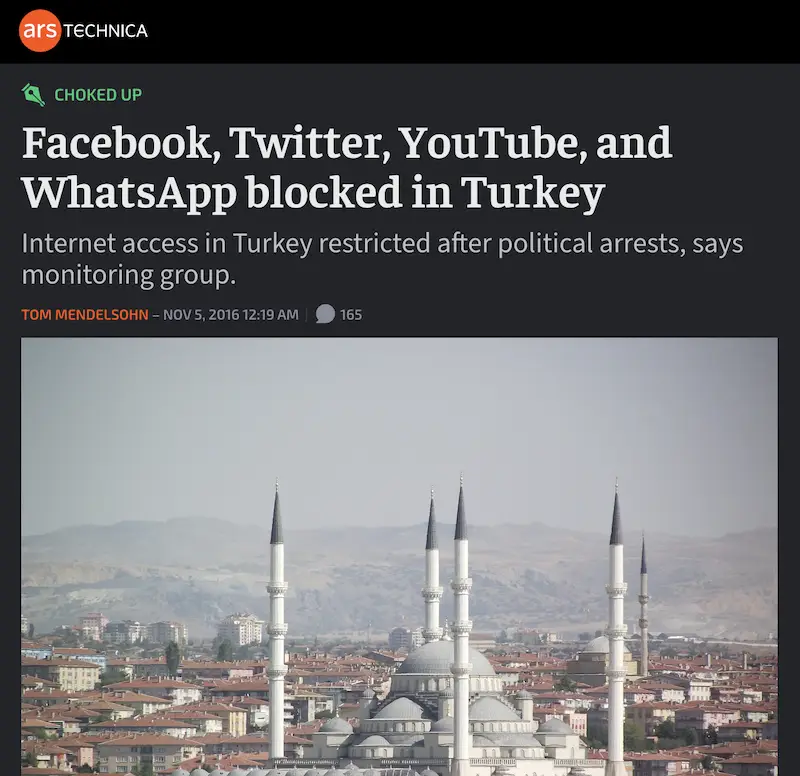
When the conversation is centralized, it only takes one switch to shut it off.
Even ownership can change the flow of ideas.
When Elon Musk bought Twitter, it instantly became clear that a single individual could shape how conversations spread and which ones get buried, not even just for his country, but for the whole world.
This is the danger of letting a few platforms, or a few individuals, control the world’s public square. And it’s why we need to take it back.
So let’s start simple.
If you run a blog, turn the comments back on. Make it easy to post. Make it feel like part of the article, not an afterthought hidden under a pile of ads.
Then, invite people back in. Don’t just drop a link on social media and wait. Ask a question in your post and tell readers, “I’ll be in the comments if you want to talk about this.” If they know you’re there, they’ll come and they’ll bring others with them.
It might be slow, you might get crickets, but it will be a step back in the right direction.
And most importantly, let’s own the space. Your site is your house. Keep it open, keep it welcoming, but remember it’s yours. You don’t need a billion people talking at once. You need the right people, talking to each other, where the words won’t vanish tomorrow.
The platforms might have taken the conversation, but they didn’t lock the door behind them. We can walk back in any time.
This is already happening on the edges of the internet, with the Fediverse and Web3.0, but we need to make it back into being the norm, not the exception. Mainstream, not fringe.

The old objections don’t hold up anymore
Whenever you talk about bringing comments back, the same objections pop up.
Spam. Trolls. Time-consuming moderation.
And yes, these were real problems. If you blogged in the 2000s, maybe you had a flood of “Buy sunglasses here” comments, the one user who turned every thread toxic, and the hours you could lose just cleaning things up.
On this blog, I do have to clean things up from time to time, with spam comments from bots dropping a link, trying to get some SEO juice somehow.
But those are problems that should be solved with technology… not reasons to give up.
We’ve already seen how it can work.
Reddit has an “AutoMod” that catches low-quality posts before they go live. StackOverflow uses community upvotes and downvotes to surface the best answers and bury the worst. Even YouTube’s comment filters let you hold suspicious messages for review.
We don’t need to reinvent the wheel. Developers could (and should) make commenting plugins that combine the same tools:
- Auto-filtering for spam and abusive language.
- Community voting so great comments rise and bad ones sink.
- Flagging so regular readers can help moderate.
- AI-powered review that weeds out obvious garbage.
And honestly, a good community does half the work for you. People upvote what’s worth reading, downvote what isn’t, and call out bad behavior. The bigger platforms have proven this works at scale, there’s no reason it can’t work for a blog.
In fact, this should be a great startup idea if someone cares to tackle it (in better ways than currently available). I’m sure many would pay to have conversations on their website, without the hassle of moderation.
Closing comments instead of fixing them really wasn’t the only choice. It was just the easy choice. And it’s time to undo it, one blog at a time (starting with yours).

A pledge to our campfire
I’ve never closed comments on the TenScores blog, and we never will. That’s my pledge. Even when I get crickets that leave feeling like I’m having a conversation with the void.
This space will always be a place where the article and the conversation live together, where readers can talk to us and to each other. Give us feedback, praise or criticism, it’s all welcome.
This can’t just be on authors. Readers have a role to play.
If you enjoy a blog, don’t just read it… join the conversation right there. Leave a thought, ask a question, challenge an idea. That’s how you tell the author it’s worth keeping the door open and encourage them to keep writing things worth discussing.
We can’t rebuild the open web if we keep treating blog comment sections like ghost towns. We can’t expect writers to hold the space if we never step into it. We can’t take back the power we gave big platforms, if we don’t give any to our smaller communities.
So here’s the deal: we’ll keep the space alive, and you keep it breathing.
If more of us make the same pledge, we can bring back the kind of internet where the conversation starts at home, stays connected to the content, and belongs to the people who create and read it.
The internet gave us this power once.
We gave it away. Let’s take it back.

It’s more than just comments
The loss of blog conversations isn’t the only thing we’ve watched slip away, and it’s part of a bigger, more sinister pattern that is driving the web towards less autonomy.
Over the years, we’ve traded other pieces of the open web without much of a fight:
- The open, chronological feeds we controlled ourselves.
Replaced by algorithmic feeds on platforms like Twitter (yes, it’s still a bird), Instagram, TikTok, etc… where what you see is decided by a black box designed to keep you scrolling, not to keep you informed. We went from “I choose what to follow” to “the algorithm decides what I see.” - The ownership of our own content, hosted on our own terms.
Replaced by posting on rented land, all living on servers we don’t control, subject to sudden deletion, demonetization, or being hidden from view. Entire communities like Google+ vanished overnight, taking their archives with them. - The small, diverse communities that made the internet feel like a patchwork of unique neighbourhoods.
Replaced by giant monoculture platforms where every discussion is flattened into the same format, driven by the same popularity metrics. Niche forums and independent sites, hobby-specific bulletin boards, or personal blogs were swallowed or abandoned as people moved to facebook groups or Discord servers hidden behind logins. - The sense of permanence, where what you posted was still there years later for anyone to find.
Replaced by ephemeral content and disappearing histories. Social platforms bury older posts under endless feeds, or delete them entirely (as with Snapchat or Instagram Stories). Search engines can’t surface conversations locked inside walled gardens, so it’s like they never happened.
All of these losses have one thing in common: they moved power from the many to the few.
And each one can be brought back. One at a time.
Blog conversations are just one brick to put back in place. If we can restore the habit of starting the discussion on our own ground, we can do the same with the way we share, the way we host, the way we connect.
This isn’t about nostalgia for “how the internet used to be.”
It’s about shifting the trajectory we’re on…
From a world where a small number of corporations own the conversation, set the rules, and keep the profits, to a world where small, decentralized communities hold their own power, set their own rules, and keep the benefits for themselves.
When we do that, we’ll be participating in the evolution of humanity itself. A course correction.
From being controlled by a handful of centralized giants, to living in a web of self-sustaining, self-governing spaces that exist for the well-being of their own members, and… by extension… for the well-being of all.
This battle is bigger than just comments. And it’s going on all around you.
From the tyranny of world banks to the creation of blockchain and crypto, giving monetary freedom back to the masses. From the rise of closed, centralized AI companies calling themselves “Open,” to the creation of open-source LLMs that put AI power back into the hands of truly open communities.
It starts here. With us. And with something as simple as opening the comment section on your blog. Do it now, then let me know, I will join your conversation.
🤝 So, If you own a blog…
- In the marketing & advertising space
- You have a commenting section open
- You’d like more people to engage
Share your blog in our own comment section below, I’ll make sure to visit, leave a note and bookmark it for your future content. Others might do the same. See you on your blog.