By Tenscores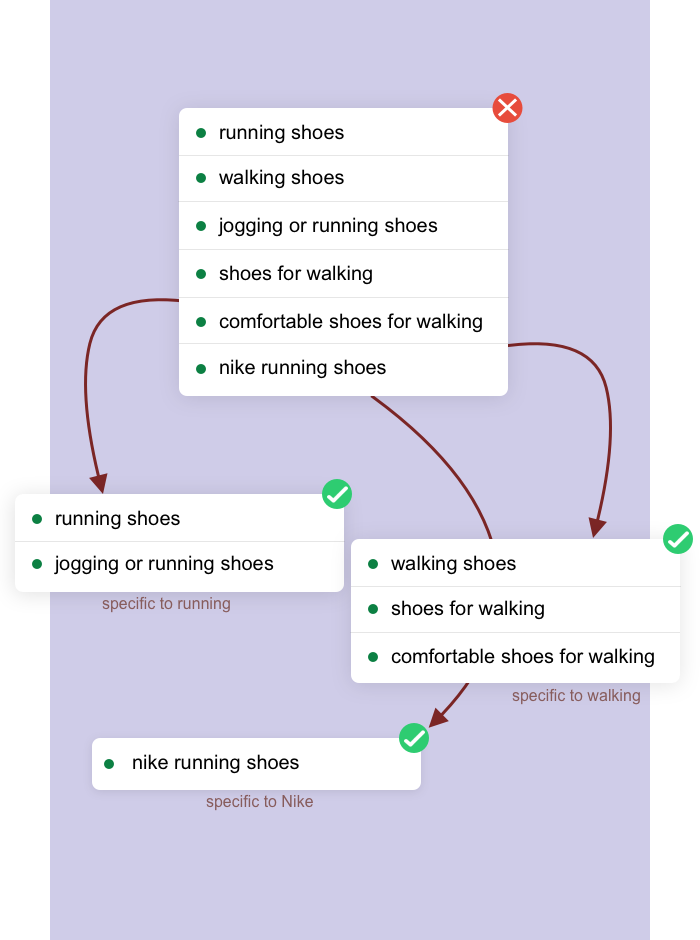
When it comes to setting up a Google Ads campaign, one of the most crucial steps is selecting and grouping keywords. In order to get the most out of your campaign, it is essential to understand how to group keywords in a way that aligns with search intent. By doing so, you can ensure that your ads are shown to the right audience, at the right time, and in the right way. In this blog post, we’ll discuss the importance of grouping keywords based on search intent and how to do it effectively.
Prioritizing Search Intent as the Primary Grouping Method
Search intent refers to the reason behind a user’s search query. Understanding search intent is essential in grouping keywords together, as it allows you to target your ads to users who are searching for something specific.
If you group keywords based solely on broad relevance, or semantics, you will end up not being specific enough to write ads that speak to a specific searcher’s need.
Someone looking for “running shoes” is a very different searcher than someone looking for “nike running shoes”. Although similar, those two keywords have different intents, one being a general search on running shoes, the other being specific to the Nike brand.
Search intent is a crucial factor to consider when grouping keywords for your Google Ads campaign. By prioritizing search intent as the primary grouping method, you’ll be able to focus on the types of searches that are most relevant to your business. This will help you create more effective ads that are targeted to the right audience, which can lead to higher click-through rates, conversions and ultimately, more revenue.
To prioritize search intent as the primary grouping method, start by identifying the different types of search intent. There are two main types of search intent: informational and commercial. Informational keywords should never be mixed together with commercial keywords and vice versa.
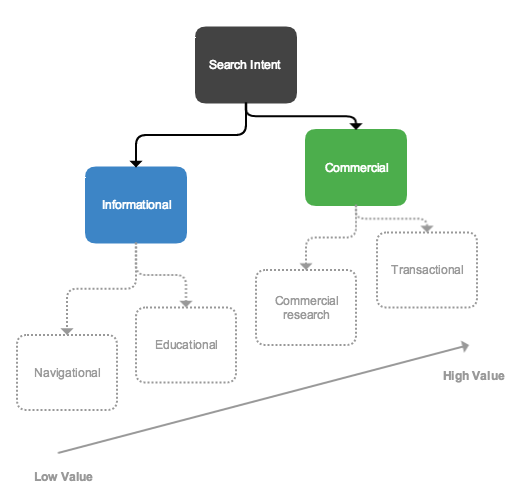
Once you’ve identified the different types of search intent, find the keyword modifiers that change the intent of a particular search, then group your keywords accordingly. For example, if your business sells running shoes, you may group your keywords into categories such as “best running shoes,” “affordable running shoes,” and “jogging and running shoes”. By doing so, you can ensure that your ads are shown to users who are in the market for running shoes, and who are searching for them using the appropriate keywords.
Why You Shouldn’t Group By Semantics
When it comes to grouping keywords for Google Ads, there are two main approaches: semantic-based grouping and search intent-based grouping. Semantic-based grouping involves grouping keywords based on their meaning or semantic similarity. For example, if you sell shoes, you may group your keywords into categories such as “sneakers,” “boots,” and “sandals.” While this approach can be effective in some cases such as SEO, it does not take into account the user’s search intent and is sub-optimal for ads.
On the other hand, search intent-based grouping involves grouping keywords based on the user’s search intent. This approach takes into account the reason behind the user’s search query and groups keywords accordingly. It allows you to tailor your ads to the specific need of a searcher in a particular situation, at a particular time.
While both approaches can be effective for different scenarios, search intent-based grouping is generally considered to be the optimal approach. By prioritizing search intent as the primary grouping method, you can ensure that your ads are targeted to users who are searching for something specific. This will lead to higher click-through rates, higher quality scores, more conversions and ultimately, more profit.
In addition to being more effective, search intent-based grouping is also more efficient. By grouping keywords based on search intent, you can create more targeted ads with less overall keywords. This can help you save money on your Google Ads campaign, as you will not be targeting users who are not interested in your product or service.
While both semantic-based grouping and search intent-based grouping can be effective, search intent-based grouping is generally considered to be the optimal approach. By grouping keywords based on the user’s search intent, you can create more effective and efficient ads that are targeted to the right audience, which can lead to higher click-through rates, conversions and ultimately, more revenue.
The Importance of Negative Keywords
In addition to grouping keywords based on search intent, it’s also important to include negative keywords in your campaign. Negative keywords are words or phrases that you don’t want your ads to show for. Including negative keywords ensures that your ads are only shown to users who are searching for something relevant to the intent of the chosen ad group.
For example, if your business sells high-end running shoes, you may want to include negative keywords such as “cheap” or “budget” to avoid showing your ads to users who are not interested in high-end products. By doing so, you can ensure that your ads are only shown to users who are more likely to convert.
Monitoring and Refining Your Campaign
Once you’ve set up your Google Ads campaign and grouped your keywords based on search intent, it’s important to monitor and refine your campaign on an ongoing basis. By doing so, you can ensure that your ads are performing well and that you’re getting the most out of your budget.
One way to monitor your campaign is to regularly review your search terms report. This report shows you the search terms that triggered your ads, allowing you to see which keywords are performing well and which ones may not be relevant. Based on this information, you can refine your campaign by adding or removing keywords, adjusting your bids, or updating your ad copy.
Conclusion
Grouping keywords together for Google Ads is a crucial step in setting up a successful campaign. By prioritizing search intent as the primary grouping method, including negative keywords, and monitoring and refining your campaign on an ongoing basis, you can ensure that your ads are shown to the right audience at the right time. So, take the time to understand search intent, group your keywords accordingly, and watch your campaign performance soar.
To summarize, grouping keywords for Google Ads requires a thoughtful approach that involves understanding your target audience’s search intent, creating categories based on that intent, and refining your approach over time. By following these steps, you’ll be able to create more effective ads that are targeted to the right audience, which can lead to higher click-through rates, conversions and ultimately, more revenue. So take the time to plan your campaign carefully, and you’ll reap the rewards in the long run.
Bonus: TenScores can group your keywords by search intent automatically in seconds. You don’t have to do the guess work nor figure it out for large lists of keywords. Give it a try!